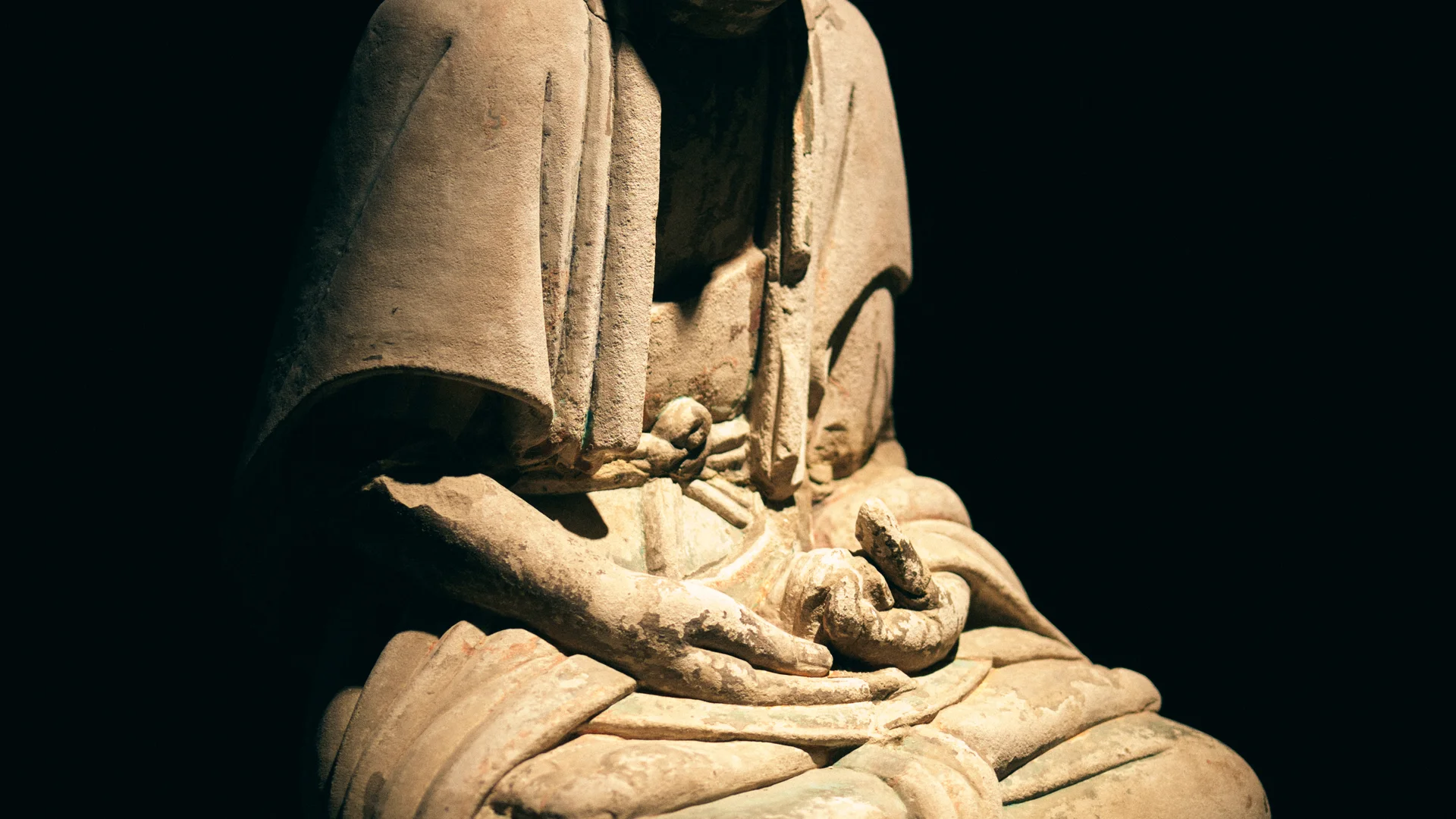
Quick facts
What to know before you go
Baodingshan Rock Carvings — The Cliffside Buddhist Narrative That Gives Chongqing A Serious Sacred-Art Anchor is a curated China Hidden Gems destination in Chongqing, selected for travelers who want the place, timing, effort, and logistics in one scan.
- Administrative location
- Dazu, Chongqing
- Chinese name
- 宝顶山石刻 · Baodingshan Shike
- Best season
- March to May and September to November
- Difficulty
- Easy
- Time needed
- Half day to full day
- Typical cost
- $$
- Getting there
- Treat Baodingshan as a focused heritage route with enough time for slow walking and interpretation rather than as a rushed add-on stop.
Editorial briefing
Why this place works
A rights-safe guide to Baodingshan for travelers deciding whether this Dazu cliffside sacred-art site deserves a dedicated day, with practical notes on pacing, interpretation, crowd timing, and why Baodingshan works best as a coherent narrative route rather than as a generic UNESCO checkbox.
Why go
- A rights-safe guide to Baodingshan for travelers deciding whether this Dazu cliffside sacred-art site deserves a dedicated day, with practical notes on pacing, interpretation, crowd timing, and why Baodingshan works best as a coherent narrative route rather than as a generic UNESCO checkbox.
- Baodingshan Rock Carvings — The Cliffside Buddhist Narrative That Gives Chongqing A Serious Sacred-Art Anchor gives travelers a concrete reason to plan around Dazu, chongqing, not just a generic first-trip city list.
- It is strongest for sacred art, buddhist, heritage, with enough practical context to compare timing, difficulty, and onward route fit.
Turn this into a trip
Save Baodingshan Rock Carvings — The Cliffside Buddhist Narrative That Gives Chongqing A Serious Sacred-Art Anchor, then plan around it.
Keep this gem on your device, open it in your bucket list, or start a planner draft with the destination already filled in.
Trip planning intake
Ask whether Baodingshan Rock Carvings — The Cliffside Buddhist Narrative That Gives Chongqing A Serious Sacred-Art Anchor fits your route.
This is a lightweight planning signal, not an instant concierge. Leave your trip context and a real question, and the team can reply manually after review.
Story visuals
Baodingshan Rock Carvings — The Cliffside Buddhist Narrative That Gives Chongqing A Serious Sacred-Art Anchor
The Chongqing Heritage Page That Finally Slows The Tempo Down
Baodingshan matters because it changes the speed of Chongqing. Most travelers meet the municipality through vertical skylines, river views, dense districts, and transport spectacle. All of that is real, but it can also trap the destination inside one urban identity. Baodingshan breaks that frame. It replaces momentum with attention, and it does so without becoming abstract or academic.
The site is powerful not simply because it is old, nor merely because UNESCO has already certified its importance. The real value is that the carvings are experienced as a sequence. You move through a cliffside narrative where sculpture, relief, religious storytelling, and walkway rhythm reinforce one another. That continuity is what turns the visit from a collection of objects into a route with real weight.
A premium page should protect that understanding. Baodingshan is weaker when sold as one more cultural day trip that can be consumed at sightseeing speed. It becomes much stronger when the traveler understands that the route asks for looking, reading, and staying with the imagery long enough for it to stop feeling decorative. The site does not need theatrical marketing. It needs pacing.
Why It Works
First, Baodingshan is unusually legible for a sacred art site. Many important carving complexes or cave-temple destinations can overwhelm first-time visitors because the significance is distributed too widely, or because the visitor needs too much prior knowledge before anything lands. Baodingshan is denser than an ordinary attraction, but it still communicates clearly. The route holds together even for travelers who are not specialists.
Second, the destination gives Chongqing genuine cultural depth rather than generic heritage prestige. That distinction matters. Plenty of destinations borrow the language of “history” and “culture” without creating a strong visitor experience. Baodingshan earns the claim because the carvings are not secondary decoration around a scenic backdrop. They are the destination. The cliffside program remains the core of the visit from beginning to end.
Third, the site benefits from scale without becoming monumental in an empty way. Some sacred destinations impress by size alone and then thin out. Baodingshan does not. The large sculptural moments matter, but so do the transitions, the detail work, and the cumulative effect of moving through one interconnected visual field. The page should make that clear instead of flattening everything into one iconic statue narrative.
How To Shape The Day
Start by giving the route enough time to breathe. Baodingshan is not best approached as a hurried extension after a long transfer day. The site needs enough mental space for the traveler to stop scanning and start reading. If you rush the route, you still see carvings, but you miss the structure that makes them persuasive.
The second decision is whether you want the day to be image-first or interpretation-first. The strongest visits combine both, but the order matters. If you come looking only for photographic highlights, the site can feel fragmented. If you allow the larger narrative and iconographic sequence to lead, the visual payoffs become stronger because they belong to something bigger.
The third decision is crowd tolerance. Popular sacred-art sites lose clarity when visitors move through them as a current instead of as observers. That does not mean the site becomes invalid when busy. It means the traveler should protect quieter windows when possible, especially if the goal is to do more than collect evidence of being there.
A fourth decision is how to relate Baodingshan to the broader Dazu complex. For most travelers, focusing on Baodingshan as the main event is the right move. It is coherent enough to carry a day and deep enough that adding too much else can actually dilute the experience. A premium page should be comfortable recommending concentration over completeness.
What To Prioritize
Prioritize sequence over trophies. The carvings work best when encountered as a route rather than as a scavenger hunt for famous elements. This is one of the clearest ways to keep the page honest and useful.
Prioritize interpretive patience too. Baodingshan is not difficult, but it is demanding in a softer way. It asks the visitor to look longer than usual. That is exactly why it deserves a place in the product. Not every destination should reward speed.
It is also worth prioritizing plain language over overreverence. The site is extraordinary, but it does not need mystical inflation. It becomes more trustworthy when the page says directly that this is a cliffside sacred-art route whose value comes from narrative continuity, religious imagery, and sustained visual attention.
A final priority is protecting the distinction between Baodingshan and “heritage content” in the abstract. Many heritage pages become generic because they only describe importance, not experience. Baodingshan should never feel like that. What matters is not only that it is important, but that the route itself still works on the ground for a first-time traveler willing to slow down.
What Can Go Wrong
The most common mistake is underallocating attention. Travelers sometimes arrive at carved heritage sites expecting one or two obvious highlights to carry everything else. At Baodingshan, that approach weakens the destination almost immediately. The route rewards continuity, not just isolated moments.
Another mistake is treating the site as purely didactic. The opposite problem also exists: some travelers assume that if they are not art historians, the visit will feel distant or overly academic. That is usually not true. Baodingshan is substantial, but it is also surprisingly readable if the visitor arrives with patience rather than anxiety.
The third mistake is building the day around transport efficiency instead of site quality. If the route is framed as just another item to squeeze in, the traveler often ends up with proof of visit but not much conviction. Baodingshan deserves better than that, and the page should say so clearly.
Who Should Save It
Save Baodingshan if you care about sacred art, carved narrative surfaces, and routes that become more rewarding the longer you stay with them. It is especially strong for travelers who want a Chongqing page that balances the city’s kinetic identity with a slower, older, and more interpretive experience.
It is weaker for travelers who only want a compact photo stop, who dislike historically dense destinations, or who need fast-moving novelty throughout the day. Baodingshan is worth it when the traveler is ready to trade speed for depth.
What To Confirm Before You Go
Before finalizing the route, confirm how much quiet time the day really has, whether you are approaching the visit as a single coherent site instead of as a checklist, and whether you are willing to let interpretation guide the pace. The honest promise is simple: Baodingshan is rewarding when you visit it as a cliffside narrative route, not just as another heritage stamp.
Traveler actions
Save, check in, share, and help other travelers judge whether this place is worth the trip.
Traveler Comments
Share your Baodingshan Rock Carvings — The Cliffside Buddhist Narrative That Gives Chongqing A Serious Sacred-Art Anchor experience
Continue exploring
More in chongqing
View all →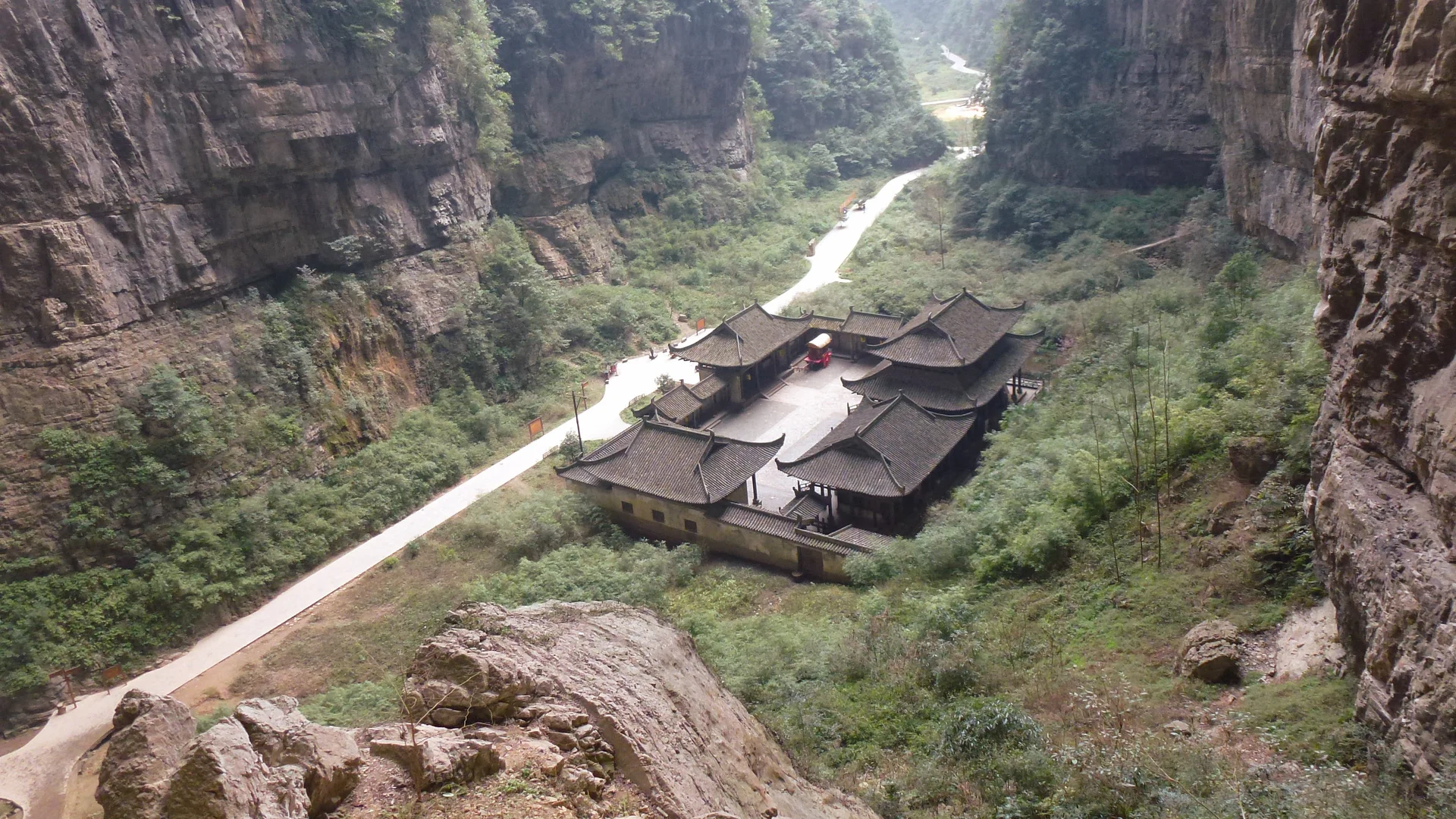 chongqing
 Wulong Karst — The Chongqing Landscape That Works Through Collapse, Scale, And Geological Theater
武隆喀斯特 · Wulong Kasite
A rights-safe guide to Wulong Karst for travelers deciding whether this Chongqing world-heritage landscape deserves a dedicated detour, with practical notes on route focus, scale, and why Wulong works best through sinkholes and natural bridges rather than through scattered attraction sampling.
- chongqing
- April to June and September to November
- Moderate
 chongqing
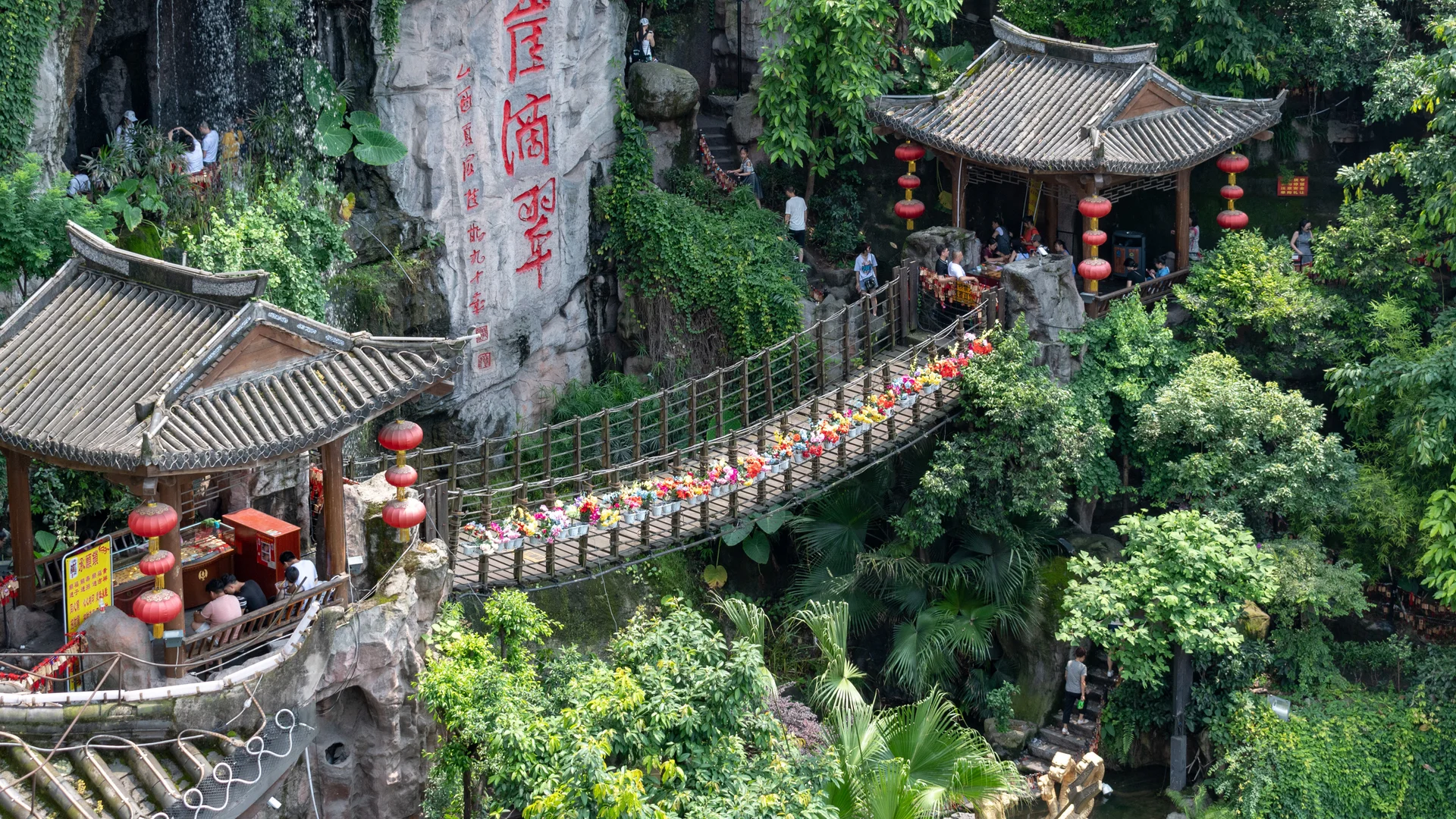
 Vertical Chongqing - A Three-Day Route Through China's Mountain City
重庆 · Chongqing
A practical city-route guide to Chongqing: Hongya Cave, Liziba, river viewpoints, night skyline, hot pot, vertical streets, base areas, and how to turn viral visuals into a sane 2-3 day plan.
- chongqing
- March to May and September to November
- Easy